



1st Edition
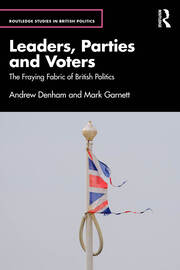
Leaders, Parties and Voters The Fraying Fabric of British Politics
Introduction
1. Conservative leaders and their party, 1975-1997
2. Labour leaders and their party, 1976-1994
3. The Conservative Party and its leaders, 1997-2016
4. The Labour Party and its leaders, 1994-2016
5. The Liberals, their successors and their leaders
6. Voters, parties, leaders and Brexit
Conclusion: The frayed fabric
Biography
Andrew Denham is Reader in Government at the University of Nottingham, UK.
Mark Garnett is the author of numerous books and articles on British politics and has taught at several UK universities.
“An incisive account of British party leadership, this book connects leaders, parties and voters in an age of instability. It is essential reading for anyone seeking to understand the changing dynamics of modern British politics.”
Timothy Heppell, University of Leeds, UK
“With characteristic vim and verve, Denham and Garnett take us on a lively journey through the last half century of Britain's political history, organised around the triumphs and tribulations of party leaders, their supporters, and their opponents. Unflinching in their characterisations, the authors challenge previous assumptions with the confidence and authority that comes from their years of scholarship.”
Richard Johnson, Queen Mary, University of London, UK, and co-host of the Since Attlee and Churchill podcast
“This is an excellent and well-argued intellectually convincing study of leaders and leadership selection in British Politics. It shines light on selectorate motivations and their disparate relationships with their party and the wider voter-bases, thereby highlighting how and why specific leadership choices are made. The authors have produced an important text that evaluates the democratic structures of the parties and their respective selectorates. This makes it a vital analysis for students of all levels who are interested in the academic study of UK party politics and leadership.”
Andrew S. Roe-Crines, University of Liverpool, UK
