



1st Edition
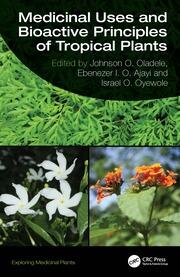
Medicinal Uses and Bioactive Principles of Tropical Plants
Chemistry of bioactive compounds in medicinal and herbal plants. Advanced techniques and methods of extraction of bioactive compounds in plants. General principles in isolation and characterization of bioactive compounds in plants. Genomic editing to optimize pharmacologically active plant-based natural bioactive compounds. Metabolic profiling and therapeutic uses of bioactive compounds in plants. Application of bioactive compounds in plants in drug discovery, design and formulation: Recent advances. Bioactive compounds in plants: Bioavailability, safety and toxicity. Molecular mechanisms underlining antioxidant properties of bioactive compounds in plants. Bioactive compounds in plants and their antiviral properties. Bioactive compounds in plants and their antibacterial activities. Bioactive compounds in plants and their antifungal activities. Bioactive compounds in plants and their anti-inflammatory properties. Bioactive compounds in plants and their anticancer properties. Bioactive compounds in plants as therapeutic agents in the treatment of IBD. Efficacy of bioactive compounds in plants in brain health and diseases. Plant-derived bioactive compounds in treatment of diabetes and metabesity. Plant-derived bioactive peptides in human diseases and health. Clinical trials and applications of bioactive compounds in plants in treatment of human diseases. Tools for safety assessment of bioactive compounds in plants. Nanoparticles of bioactive compounds in plants and their medicinal properties
Biography
Johnson O. Oladele is a Director at Royal Scientific Research Institute, Osun State, Nigeria, and Former Lecturer at the Department of Chemical Sciences, Faculty of Science, Kings University, Nigeria. He obtained a bachelor’s degree (BSc (Hons)) in biochemistry from Osun State University. He had his postgraduate studies at University of Ibadan, where he obtained his master’s degree (MSc) in biochemistry and molecular toxicology, and his Ph.D. (biochemistry) from University of Ilorin, Nigeria. He continues with his postdoctoral studies in toxicology at Texas A & M University, College Station, TX, USA. Johnson belongs to a number of national and international professional associations. He has authored many research articles published in peer-reviewed journals and chapters in book series. He serves as a reviewer for several journals hosted by Taylor & Francis CRC, Elsevier, Springer and as an editorial board member of two learned peer reviewed journals. He is an editor of the book projects published by CRC Press (Taylor & Francis). Johnson has vast experience in both teaching and research. His research findings have been presented in several seminars, workshops, and conferences. He has also received awards and honours in recognition of his efforts, distinguished services, and contributions to his career and associated organizations.
Ebenezer I. O. Ajayi is a Senior Lecturer at the Department of Biochemistry, Faculty of Basic and Applied Sciences, College of Science, Engineering and Technology, Osun State University, Osogbo, Nigeria, where he recently completed a two-year tenure as Acting Head of Department. He obtained his B.Sc. (2004) from the University of Ado-Ekiti, M.Sc. (2008) and Ph.D. (2015) from the University of Ibadan, Nigeria. Over the course of his dynamic academic and research career, he has served as Sub-Dean of Student Affairs, Principal Investigator on several funded projects, and mentor to undergraduate, master’s, and doctoral students across Africa, Asia, and South America. Dr. Ajayi has been a Visiting Scholar in India and Argentina, where he advanced his expertise in membrane biophysics, nanobiotechnology, and clinical biochemistry – fields that form the core of his interdisciplinary research. His investigations explore the ecological and molecular impacts of green-synthesized or formulated drug candidates for metabolic complications and infectious disease-related neurobehavioral disorders, employing diverse models such as Drosophila melanogaster, Galleria mellonella, Hermetia illucens larvae, amphibians, and rodents. He has published over 50 peer-reviewed papers, reviews, and book chapters, and serves as a reviewer for international journals in biochemistry, pharmacology, and molecular biology. A recipient of numerous grants and awards, including a prestigious three-year postdoctoral fellowship from the Argentinian Ministry of Science, Technology, and Productive Innovation, Dr. Ajayi continues to contribute to science diplomacy and collaborative research. He is also a local lead of the NASA Space Apps Challenge, Osogbo, and a mentor in several continental mentorship initiatives such as the Science Edge Empowerment Initiative (SEEI), Africa Graduate Mentorship and Coaching Programme, Africa Young Scientists Mentorship Programme, and the Child, Youth & Women (ChiYoWo) Sustainability Hub. An advocate for transdisciplinary learning and the ethical use of tropical biodiversity in drug discovery, he has co-edited several scholarly volumes, including Nutrition and Diet in Health: Principles and Applications and Sustainable Use of Plants and Their Products in Neurodegenerative Diseases Management, both published by CRC Press (Taylor & Francis). As co-editor of Medicinal Plants and Non-Communicable Diseases and this current volume of Medicinal Uses and Bioactive Principles of Tropical Plants, his academic voice continues to bridge biochemistry, biotechnology, and sustainable pharmacognosy, illuminating Africa’s growing contributions to global health research and innovation.
Olu Israel Oyewole is a professor of biochemistry at Osun State University, Osogbo, Nigeria. He holds B.Sc., M.Sc. and Ph.D. degrees in Biochemistry from the University of Ilorin, Nigeria. His research focus includes phytomedicine, pharmacology and molecular toxicology. He has contributed significantly to scholarship by investigating the role of natural indigenous medicinal agents in the prevention and management of various disorders such as diabetes, cardiovascular diseases, hyperlipidemia, sickle cell anaemia and organ damage using animal models by exploring their antioxidative and free radical scavenging properties. His research findings have provided knowledge for the design and development of new drugs from natural origin with little or no toxic effect which can be used in combating free radical-mediated diseases. He has researched extensively to find suitable antidotes to counter the toxic effects of herbicides, pesticides, food additives and spices which has added new knowledge in the field of environmental and food toxicology. He has authored well over sixty (60) articles in reputable national and international peer-reviewed journals and has supervised more than 150 undergraduate dissertations and 20 postgraduate research theses. Professor Oyewole has presented papers at many local and international conferences, workshops and seminars and has won many research grants and awards. He also belongs to many professional associations.
