




1st Edition
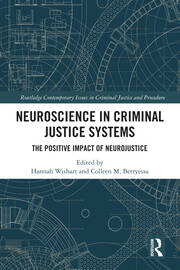
Neuroscience in Criminal Justice Systems The Positive Impact of Neurojustice
Introduction
Hannah Wishart and Colleen M. Berryessa
1. How Has Neuroscience Positively Contributed to English Youth Justice?
Hannah Wishart and Ray Arthur
2.The Neuroscience of Brain Injury in Criminal Cases: An International Scope
Deborah W. Denno
3.‘Excited Delirium’ in Law Enforcement Contexts: Scientific, Legal, and Ethical Concerns
Joanna Naples-Mitchell, Brianna da Silva Bhatia, Joshua Budhu, and Altaf Saadi
4. From Neurolaw to Neurorights: The Impact of Neuroscience on Dutch Criminal Justice and Considerations about the Future
Naomi van de Pol, Gerben Meynen, and Sjors Ligthart
5. Neuroprediction: The Future of Crime Prevention or Fostering Injustice?
Elizabeth Shaw and Gregg D. Caruso
6. The Relevance of Trauma as a ‘Mental Disorder or Abnormality’ in Sentencing: An Australian Case Study
Katherine J. McLachlan
7. The impact, and lack of impact, of neurodiversity in the criminal justice system in Aotearoa, New Zealand
Mark Henaghan and Jean Choi
8. Mental Health and Neuroscience: Future of Sentencing and Incarceration
Sandy S. Xie and Olivia Choy
9. The Impact of Neuroscience on Prison Litigation: The Case of Prolonged Solitary Confinement
Federica Coppola
10. How Neuroscience Can Improve the Sentencing of Defendants with Autism Spectrum Disorder
Colleen M. Berryessa and Carolina R. Caliman
11. Drug Policy: Neuroscience-Informed Responses to Substance Use
Amanda V. Chen and Stephanie Tabashneck
12. Neuroscience Education in the Criminal Justice System
Mia A. Thomaidou
Biography
Hannah Wishart is Senior Lecturer in Law at the University of Sunderland, U.K.
Colleen M. Berryessa is Associate Professor at the School of Criminal Justice at Rutgers University, U.S.
