





2nd Edition
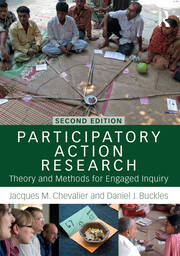
Participatory Action Research Theory and Methods for Engaged Inquiry
Introduction
Module 1: Advancing Theory
1. Ins and outs of Participatory Action Research
2. Pragmatic, psychosocial and critical PAR
Module 2: Design and Facilitation
3. Planning systems that learn
4. Participatory Action Monitoring and Evaluation
5. Measuring with measure
6. Skills, process design and ethics
Module 3: Exploring Problems
7. Getting to the roots
8. Participatory mapping and Citizen Science
9. Factors at play
10. Paradox
Module 4: Knowing the Actors
11. Stakeholder basics
12. Critical stakeholder thinking
13. Social Analysis CLIP
14. Positions and values
Module 5: Assessing Options
15. Thinking outside the box
16. Reconciling differences
17. Anticipating the future
Module 6: System Thinking
18. System Dynamics
19. Domain Analysis
20. Breaking the dependency on tobacco production
Conclusion
Biography
Jacques M. Chevalier is Chancellor's Professor Emeritus in the Department of Sociology and Anthropology at Carleton University, Ottawa, Canada, and an independent consultant.
Daniel J. Buckles, formerly with the International Development Research Centre (IDRC), is Adjunct Research Professor in the Department of Sociology and Anthropology at Carleton University, Ottawa, Canada, and an independent consultant.
"This groundbreaking book is a rich resource of concepts and tools for all who are engaged with the practice and theory of Participatory Action Research. Drawing on their lifetimes of experience and innovation, the authors take an open and inclusive approach to strengthening the foundations and diversifying the methods of engaged research. The extraordinary scope of this book and the new perspectives it offers, together with an accessible style, will inform, provoke and inspire field practitioners and academics alike to creatively design research for the many challenges of the 21st century." - Robert Chambers, Institute of Development Studies, University of Sussex, UK
"Chevalier and Buckles have improved on an already exceptionally helpful book I used in my teaching at Cornell University, with great success. They now combine thoughtful explorations of mid-range theories on problem-solving, stakeholder analysis, risk assessment and other foundational concepts with a wide variety of practical methods and tips for designing meaningful research. Their overview of PAR theory and guidelines on how to bridge distinct traditions now offer a well-rounded and complete teaching text." - Davydd J. Greenwood, Goldwin Smith Professor of Anthropology Emeritus, Cornell University, USA
"This is a wonderful book. Its overview of participatory action research, including the insights of French psychosociology, is unparalleled. It bridges traditions that have operated in silos for far too long. Chevalier and Buckles also provide a wide range of ‘skilful means’ to effectively meet and reconcile the requirements of democratic participation, transformative action in concrete settings and the advancement of general knowledge." - Christian Michelot, École Centrale-Supélec, France
Praise for the first edition
"This book is a must for anyone seriously committed to research that ensures the authentic participation and empowerment of people from all walks of life, be they from oral or textual traditions, women or men, old or young, articulate or hesitant, outspoken or reserved." - Farida Akhter, UBINIG (Policy Research for Development Alternative), Bangladesh
". . . a wonderful compendium, replete with practical tools and techniques that bring rigour and vigour to the international dialogue among action researchers . . . This is a serious volume worth the time of any action researcher who is curious about how western (including francophone) perspectives on PAR come alive. This volume makes a significant contribution to the collective craft of scholarly practice among action researchers." - Hilary Bradbury-Huang, Oregon Health & Science University, USA
