




1st Edition
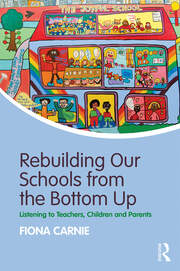
Rebuilding Our Schools from the Bottom Up Listening to Teachers, Children and Parents
Introduction
- Key research and contemporary debates
- Teacher voice: listening to the professionals
- Student voice: involving students as active participants
- Parent voice: building a genuine home-school partnership
- School community voice: developing a shared vision
- Lessons from overseas
- Strategies and resources to support transformational change
Looking ahead
Biography
Fiona Carnie is an educationalist, parent and writer. She has been involved in encouraging and supporting new initiatives in the alternative and state sectors for many years and has written widely about the need for new educational approaches.
"Full of practical examples from here and abroad, and a range of resources that can be used by senior leaders, teachers and parents, the book aims to encourage and support transformative change so that schools can meet the needs of the communities they exist to serve. As teacher, parent and educationalist, the author is well positioned to write in a way that appeals to all these groups, bringing us a book that is highly readable for everyone."— Parents in Touch
"This book offers a plethora of detailed examples of ways and means through which the voices of those customarily marginalised within the education system can be boosted. In the examples of democratic praxis you can hear a story of education as if people mattered. It will be of interest to school leaders looking to widen participation and for those aspiring to lead who would further a vision of participatory democracy for schools rather than the authoritarian model so often lauded by government" - Forum Journal
