



1st Edition
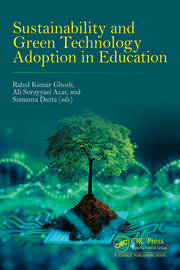
Sustainability and Green Technology Adoption in Education
Preface
SECTION I: Foundations, Ethics, Policy, and Global Frameworks of Sustainable Education
1. Green Tech Mindset: A Structural Equation Modelling Approach to Investigating the Role of Metacognitive Awareness and Eco-Innovation Skills in Student-Centric Green Technology Adoption
2. Tech-ing Education in the Global South: Ethical Governance and Policy Directions for Sustainable Learning in the Philippine State Universities and Colleges
3. Decolonizing Green Education: Algorithmic Bias, Data Sovereignty, and Indigenous Futures
4. The Role of Universities in Addressing the Implementation of the 2030 Agenda during Conflict
5. Pathways to Sustainability: The Impact of Environmental Education, Awareness, and Social Norms on Gen Z’s Green Intentions
6. Transforming Global Education: Integrating TPACK, ESD, and 21st Century Skills Through Digital Learning
SECTION II: Pedagogical Innovations and Teaching–Learning Transformations
7. Teaching for a Sustainable Future: Integrating Technology into Environmental Pedagogy
8. Advancing Sustainability in Science Classrooms: Student-Centered Pedagogies for Green Technology Adoption
9. From Textbooks to Simulations: Transforming Classrooms with AI and Visual Learning
10. Integrating Artificial Intelligence to Support Teaching Writing Skills of Secondary School Teachers in Remote Areas of Vietnam: A Mixed-Methods Study on Instructional Innovation
11. Digital Nudges for Device Mindfulness: Reducing AI Reliance and Promoting Critical Thinking in Sustainable Smart Classrooms
SECTION III: Smart Systems, Data-Driven Solutions, and Future Directions
12. Eco-Smart Medical Education: Reducing Carbon Footprint through Digital Learning Innovations
13. Tech-Driven Sustainability in Education: Innovations and Institutional Transformation
14. Sustainable Approach of Learning Through Educational Data Mining
15. Personalized and Eco‑Friendly Learning Ecosystems: Integrating Digital Tools for Sustainable Education
16. Global Digital Learning Models for Sustainability: A Comparative Case Study of DIKSHA (India) and Sustainable Future Schools (Finland)
17. Future-Ready Digital Learning: Scaling Sustainability Through Global Tech Innovations
18. The Era of Smart and Sustainable Education: Technological Trends and Future Directions
About the Editors
Biography
Dr. Rahul Kumar Ghosh is an Associate Professor in the Department of Computational Sciences at Brainware University, Kolkata, India. He has a PhD in Information Technology and has multidisciplinary academic training spanning information technology, applied statistics & analytics and human resource & analytics. His research interests include sustainable computing, digital transformation in education, green IT frameworks, AI-enabled educational systems, and technology-driven policy innovation. Dr. Ghosh has authored and edited multiple scholarly books with international publishers and has contributed extensively to peer-reviewed journals and edited volumes. He is actively involved as a reviewer and editor for several Scopus and WoS–indexed journals. His work has been recognized through national and international awards, patents, and copyrights, particularly in the areas of sustainable digital systems and environmentally responsible computing. As an editor, he focuses on integrating ethical, technological, and sustainability perspectives to address contemporary challenges in education and society.
Dr. Ali Sorayyaei Azar is a Assistant Professor in the Department of Language and Literacy Education, Faculty of Education, University of Malaya, Malaysia. He has a PhD in Applied Linguistics and brings over two decades of international academic experience across Iran, Turkey, Qatar, and Malaysia. His scholarly expertise spans academic discourse analysis, corpus linguistics, TESL, educational technology, and digital pedagogy. Dr. Azar has published widely in high-impact international journals and has edited several books with leading global publishers. He serves on the editorial boards of multiple Scopus and ERIC-indexed journals and is actively engaged in research on technology-enhanced learning and sustainable education practices. His editorial contributions emphasize interdisciplinary scholarship, methodological rigor, and the integration of language, technology, and sustainability in educational research.
Dr. Sumanta Dutta is an Assistant Professor in the Postgraduate and Research Department of Commerce at St. Xavier’s College (Autonomous), Kolkata, India. He has a PhD in Commerce and has over two decades of teaching, research, and academic leadership experience. His areas of expertise include sustainability management, business ethics, research methodology, and higher education policy. Dr. Dutta has authored and edited several academic books and has published extensively in national and international journals indexed in Scopus, ABDC, and UGC-Care. He is an active researcher, mentor, and academic trainer, having conducted numerous workshops on research ethics and methodology in collaboration with leading institutions. His editorial work focuses on strengthening empirical rigor, ethical scholarship, and policy relevance, particularly in the context of sustainability and institutional transformation.
