





1st Edition
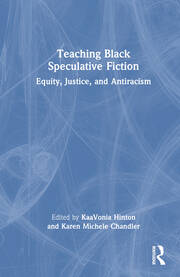
Teaching Black Speculative Fiction Equity, Justice, and Antiracism
Acknowledgments
Black Speculative Fiction as “Anchor, Compass, and Sail”
KaaVonia Hinton and Karen Michele Chandler
1. Exploring the Complexities of Environmental Disaster, Justice, and Racism in Ninth Ward
Julianna Lopez Kershen
2. The Responsibility to Remember: India Hill Brown’s The Forgotten Girl
Saba Khan Vlach
3. Reading and Engaging with Kacen Callender’s Moonflower through Intersectional Pedagogies
Meghna Prabir
4. Illusions of Identity: Counternarratives in B. B. Alston’s Amari and the Night Brothers
Jessica Gottbrath
5. The Power of Voice and Choice: Examining Blackness, Black Girlhood, and Identity in A Song Below Water
Christian M. Hines and Jenell Igeleke Penn
6. Creative Disruptions: Protest Art and Alaya Dawn Johnson’s The Summer Prince
Amanda M. Greenwell
7. Resilience, Resistance, and Healing in Tomi Adeyemi’s Children of Blood and Bone
Danielle Kubasko Sullivan
8. Teaching Counterstorytelling in High School using Tomi Adeyemi’s Children of Blood and Bone
Tabitha Lowery
9. Using a Historical Lens to Examine Agency in Mother of the Sea
Tiffany A. Flowers
10. The Monster or the (Wo)Man in Victor LaValle’s Destroyer
Jasmine H. Wade
11. Race in the Zombie Apocalypse: Teaching Justina Ireland’s Dread Nation
Michael Patrick Hart
12. Nnedi Okorafor’s Lagoon: Classroom Projects from an Animal Rights Perspective
Rosa Maria Moreno-Redondo
13. “Slavery Was a Long Slow Process of Dulling”: Octavia Butler’s Kindred as a Medium for Teaching Empathy, Social Justice, and Antiracism
Colin Enriquez
14. Slavery was a choice?: Lessons from Kindred by Octavia Butler
Mercy Agyepong
15. “I Serve the Spirits and I Heal the Living”: Communities of Care as Sites of Resistance in Hopkinson’s Brown Girl in the Ring
Justin Cosner
16. Understanding by Design with Nalo Hopkinson’s Midnight Robber
Toni S. Stevens
Resources
Index
Biography
KaaVonia Hinton is a professor in the Teaching & Learning Department at Old Dominion University and the author of many articles and books about literature for youth. She is also the co-editor, with Lucy E. Bailey, of the book series, Research in Life Writing and Education (Information Age Publishing).
Karen Michele Chandler is an associate professor of English at the University of Louisville and the author of many articles on African American, American, and youth literature. She is the co-editor, with Michelle H. Martin, of a special issue of International Research in Children’s Literature on Black spaces. Her book, Tending to the Past: Selfhood and Culture in Children’s Narratives about Slavery and Freedom, is forthcoming in 2024.
"The editors KaaVonia Hinton and Karen M. Chandler have gathered an engaging book with voices that affirm and advance the teaching of Black speculative texts. Most importantly, they honor the creative minds of authors who contribute to young people's literature and scholarship of our colleagues in Black literary criticism. Their book is already groundbreaking in the areas of antiracism and justice and as an essential guide and reference for our current generation of readers and scholars and those in the making, too."
R. Joseph Rodríguez, St. Edward's University, Austin, Texas, former editor, English Journal
"Teaching Black Speculative Fiction is an indispensable tool that echoes the imaginative cosmology of the genre, providing educators with thoughtful applications to explore the rhetorical functions of speculative fiction as a critical literary analysis tool to understand and actively resist systemic racism and injustice."
Roberta Price Gardner, Kennesaw State University
