





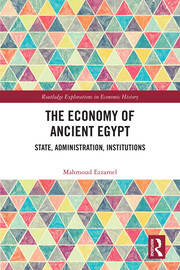
1st Edition
The Economy of Ancient Egypt State, Administration, Institutions
Introduction
PART I : THE EMERGENCE OF THE EGYPTIAN STATE AND ADMINISTRATIVE INSTITUTIONS
1. Concepts of 'the state' and ancient Egypt
2. The administrative field of power
3. The administrative field, symbolic power and social connectivity
PART II: THE INTERNAL ECONOMY OF EGYPT
4. The Egyptian economy: The debate
5. The economic resources of the state: Taxation
6. Labour, the state and Redistribution
PART III: THE STATE ECONOMY: EXTERNAL RESOURCES
7. International trade
8. International relations and the economy of the gift
9. The economy of war booty and tribute
PART IV: THE PRIVATE EGYPTIAN ECONOMY
10. Barter, money and private trade
11. Private exchange in close-knit communities and sociability
12. Private exchange in Deir el-Medina and sociable markets
Biography
Mahmoud Ezzamel is Distinguished Research Professor at IE University, Madrid, Spain. He is the author of many books, including Accounting and Order (Routledge, 2012) and has published extensively in leading organisation and management studies journals. His interdisciplinary work on accounting, management and economic history draws on insights from social theory and anthropology. He is the recipient of the 2009 Hourglass Award from the Academy of Accounting Historians.
