





1st Edition
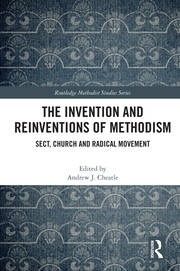
The Invention and Reinventions of Methodism Sect, Church and Radical Movement
List of Contributors
Acknowledgements
Abbreviations
Introduction
Andrew J. Cheatle
SECTION I
Methodism Sectarian Tendencies, Enthusiasm and Charismatic Outpourings of the Spirit
1. ‘A Cloud of Perfect Witnesses’: The importance of the London perfection controversy in Methodist history
Gareth Lloyd
2. Keeping the seventh commandment: Sex, scandal and reputational protection in early Methodism
David Hart
3. ‘From Earth to Heaven and Hell’– and back: The strange and wonderful journey of Elizabeth Dickinson
Gareth Lloyd
SECTION II:
Doctrinal Influences: Justification by Faith, The Church and Christian Perfection
4. The Influence of Martin Luther on the Theology of John Wesley: The Engine of Revival and Ecclesiastical Renewal
Kenneth J. Collins
5. Wesley’s Radical Ecclesiology: A Church for the World not a World for the Church; or Polity only for a Purpose
Tom Greggs
6. Entire Sanctification in British Methodism during the Victorian Era
David Bebbington
7. Entire Sanctification Critical Voices: Reappraising the Human Condition
Andrew J. Cheatle
SECTION III:
The Impact and Influence of Methodism on Modern Society
8. ‘This Work Can Not Be Done by Proxy’: Methodist Women and the Transatlantic Deaconess Movement
Christopher H. Evans
9. ‘More Methodism than Marx’: The Methodist contribution to British working-class politics 1880-1914
Graham Johnson
10. Methodism in Milingimbi: Encounter and Enculturation in Arnhem Land, Australia, 1923-1945
Bronwyn Shepherd and Joanna Cruickshank
11. ‘But Mighty Through God for the Destruction of Strongholds’: The Wesleyan Impact in the NAACP
Dennis C. Dickerson
Index
Biography
Andrew J. Cheatle is Principal Lecturer in Theology and Pastoral Theology at Liverpool Hope University, UK, and Director of Learning and Teaching Development.
“The essays in The Invention and Reinventions of Methodism are helpful to gain a better understanding of Methodism’s evolution over the past 300 years, and why it developed as it did. […] One of the main insights from this study is how Wesley’s influence, in expected and unexpected ways, continued to inform Methodist identity down to the modern era and continues to apprise it today. I therefore recommend this study on Methodism’s history and development as an important contribution.”
- Mark K. Olson in Proceedings of the Wesley Historical Society
