





Foreword Eyal Ben-Ari Part 1 1. Introduction Part 2 2. Parent-child Touch: (Dis)Locating the Body in Skinship 3. Exclusion and Inclusion in the Bedroom Part 3 4. Moving into the Big, Wide World 5. Arriving to a Conceptual Understanding of Belonging Through the Felt Meanings of Touch 6. How Touch Feels after Five 7. Conclusion
Biography
Diana Adis Tahhan is a Visiting Fellow at the University of New South Wales, Australia.
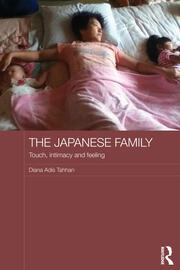
'[The Japanese Family] provides a superb, empirically rich, addition to our understanding not only of this specific society but of intimacy and closeness as conceptual tools for analyzing human relations in general. In addition, it draws upon both Japanese sociologies of emotions and those produced in the English-using academic world to propose innovative ways of looking at this special character of relationships. In this rich and sophisticated ethnography Diana thus seeks to explore how the visceral touch between bodies is related to the other types of closeness transmitted not necessarily through actual bodily contact. [...] Diana’s ethnography offers us a new way of looking at families and inter-personal relations, and at intimacy and feeling. Readers are invited into the special, at times magical, world of intimacy and closeness.' – Eyal Ben-Ari, Hebrew University of Jerusalem, Israel
Threaded through Tahhan’s book are understandings of relationality, intimacy, and connectedness as exclusively positive, equitable, and inclusive. Her book represents an ambitious project to examine the daily practices that constitute familial intimacy without continued physical contact between family members. - Kathryn E. GOLDFARB, McMaster University
