




1st Edition
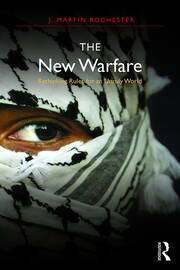
The New Warfare Rethinking Rules for an Unruly World
PART 1: INTRODUCTION: FRAMING THE PUZZLE 1. The Changing Nature of War: Do We Need New Rules for an Old Problem? PART 2: THE LAWS OF WAR: WHAT ARE THE RULES? 2. On Starting A War: The United Nations Charter and Other Jus Ad Bellum Rules 3. On Conducting A War: The Geneva Conventions and Other Jus In Bello Rules 4. On Concluding A War: The Absence of Jus Post Bellum Rules PART 3: THE LAWS OF WAR: ARE THEY STILL RELEVANT? 5. Applying Jus Ad Bellum Rules to the New Warfare: Cases 6. Applying Jus In Bello Rules to the New Warfare: Cases 7. Applying Jus Post Bellum Rules to the New Warfare: Cases PART 4: CONCLUSION: THE FUTURE OF WAR, PEACE, AND LAW 8. Adapting to the New Face of Violence
Biography
J. Martin Rochester is the Curators Distinguished Teaching Professor of Political Science at the University of Missouri-St. Louis.
"The most important application of just war theory since 9/11. Rochester asks all the difficult questions – an essential book for our time."
– John Vasquez, University of Illinois at Urbana-Champaign
"Backed by a treasure trove of research, this is an important and up-to-date study of the deterioration of international rules that govern the use of force. It should be read and pondered by international lawyers, international relations theorists, and policymakers who think about how war can be restricted by law."
– Michael J. Glennon, Boston University Law School
"This important new work suggests that the 'new face of violence' challenges international legal norms as much as it does international peace and security. To his credit, J. Martin Rochester eschews daydreaming of a better world in favor of practical reforms that incentivize compliance and further the United Nations’ concern to 'save succeeding generations from the scourge of war.'"
– Robert P. Barnidge, Jr., Webster University
