




1st Edition
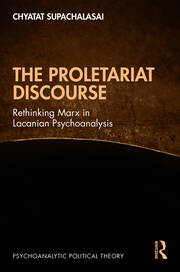
The Proletariat Discourse Rethinking Marx in Lacanian Psychoanalysis
Preface 1. Introduction 2. Situating Proletariat Discourse: The Unconscious of Capitalist Discourse 3. Hysterical Proletariat and the Specter of Communism: From the Specter of Marx to the Specter That Haunts Marx 4. Reexamining Alienation and Commodity Fetishism: Proletariat in the Vel of Alienation and the Contradictory Principles of the Unconscious 5. A Dialectic of Proletariat Self-Enjoyment: From a Pathological Existence to the Proletariat in a Logic of Lacanian Woman 6. Reassessing Surplus-Value: Proletariat in the Two Dimensions of Anxiety and a Psychoanalytic Act 7. Trauma as a Political Factor: Rethinking Dialectical Materialism and the Proletariat as Post-Traumatic Subject 8. Proposing a Lacanian Formula for Proletariat Discourse
Biography
Chyatat Supachalasai is an Associate Professor at the Faculty of Political Science, Ramkhamhaeng University in Bangkok, Thailand. Supachalasai teaches subjects related to political theory, ethics, political philosophy and international politics. He has authored several books in Thai, delving into the realms of Lacanian psychoanalysis, Poststructuralism, Marxism, and Speculative Realism. His published articles in English examine the theoretical connection between Lacanian psychoanalysis, subjectivity, and political resistance, as well as address contemporary issues in Thai politics. His current research interests include Lacanian psychoanalysis, Marxist theory, contemporary political thought, and trauma theory.
