




1st Edition
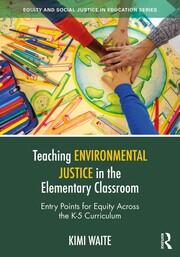
Teaching Environmental Justice in the Elementary Classroom Entry Points for Equity Across the K-5 Curriculum
Part 1: Getting Started–What Do I Need to Know To Teach About Environmental Justice? 1. Laying the Foundations for Teaching Environmental Justice in the K-5 Classroom 2. What Are Americans’ Beliefs About Environmental Justice and Climate Justice? Part 2: The First Steps—Shifting The Focus From Mainstream Environmentalism to Environmental Justice 3. Shifting from Mainstream Environmentalism to Environmental Justice 4. Towards An Intersectional Environmental Justice Part 3: Implementing The First Steps–A Toolkit of Curricular Entry-Points 5. A Toolkit of Initial Starting Points For Teaching Environmental Justice Part 4: Digging Deeper– Geography for Environmental Justice Literacy and Action 6. Thinking Like a Geographer 7. GIS and Mapping for Environmental Justice
Biography
Kimi Waite is Assistant Professor of Child & Family Studies at California State University, Los Angeles, and serves as affiliate faculty in the Ed.D. in Educational Leadership program. She is a former elementary school teacher and a district STEM Specialist.
“In a world increasingly shaped by environmental and social challenges, Teaching Environmental Justice in the Elementary Classroom offers the essential guidance educators need to begin crucial conversations with our youngest learners. This thoughtful and practical resource empowers teachers to cultivate layered leadership through nurturing students who not only understand the interconnection between people and places but who also grow into compassionate, informed community members. Rooted in care and courage, this book equips educators to foster a generation ready to engage critically and empathetically with the world around them.”
Dr. Whitney Aragaki, High School Science Teacher and co-author of Place-Based Science Teaching: Connecting Students to Curriculum, Community, and Caring for our Planet
“Through personal narrative, real classroom vignettes, and practical strategies, this book makes it easy for educators to embrace environmental justice in their classrooms. It's a must-read for all elementary teachers ready to reimagine education as a tool for systemic change.”
Margaret Wang-Aghania, Executive Director & Co-Founder of SubjectToClimate
“Kimi Waite's book is a valuable support for elementary teachers who are ready to help their students develop understanding, and cultivate a commitment to action, in relation to the most pressing local and global matters. Don't shy away from this difficult topic; help your students move forward with knowledge, hope, and geographic thinking.”
Thomas Herman, Executive Director, National Council for Geographic Education
“In this essential book, Waite equips educators with tools to teach environmental justice through four guiding principles, historical context, and national standards. Featuring ready-to-use activities, writing prompts, and links, it’s both practical and inspiring—offering a replicable model for teaching intersectionality and rethinking environmental heroes. A must-have resource!”
Justin Kaput, K-12 Science Coordinator, Suffield Public Schools
“In the current precarious political climate where educators fear "woke" retaliation, Waite provides tangible strategies for experiential, student-centered learning that can inspire positive change through genuine connection to one's community (including the more-than-human). Though the framework outlined by Waite is focused on K-5, many of these activities can be adapted for older audiences, especially solutions for relational understanding are lacking in justice discourse.”
Steve Sassaman, PhD, CTAS: Clinical Assistant Professor and Outdoor Recreation Program Director, Arizona State University School of Community Resources and Development
