




4th Edition
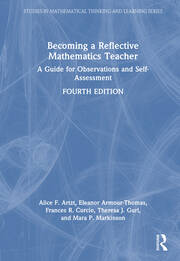
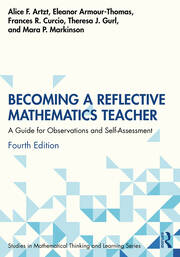
Becoming a Reflective Mathematics Teacher A Guide for Observations and Self-Assessment
Part 1: Philosophical Basis for the Model 1. Toward an Understanding of Student-Centered Teaching 2. A Framework for the Examination of Instructional Practice 3. A Framework for the Examination of Teacher Cognitions 4. Putting It All Together Part 2: How to Use the Model 5. Using the Interrelated Model of the Instructional Practice Framework (IPF) and Teacher Cognition Framework (TCF) to Examine Teaching 6. Using the Interrelated Model of the Instructional Practice Framework (IPF) and Teacher Cognition Framework (TCF) to Examine Your Own Instructional Practice and Cognitions 7. Using a Portfolio to Document How You Engage in Self-Assessment and Reflection Part 3: Evidence—The Model in Action 8. Case Studies of the Model in Action: Five Cases
Biography
Alice F. Artzt is Professor of Secondary Mathematics Education, Queens College of the City University of New York, USA.
Eleanor Armour-Thomas is Professor Emerita of Educational Psychology, Queens College of the City University of New York, USA.
Frances R. Curcio is Professor Emerita of Secondary Mathematics Education, Queens College of the City University of New York, USA.
Theresa J. Gurl is Associate Professor of Secondary Mathematics Education, Queens College of the City University of New York, USA.
Mara P. Markinson is Assistant Professor of Secondary Mathematics Education, Queens College of the City University of New York, USA.
