




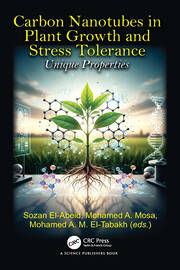
1st Edition
Carbon Nanotubes in Plant Growth and Stress Tolerance Unique Properties
Preface
1. Introduction
2. Role of Carbon Nanotubes in Agriculture Systems
3. Recycling Carbon Nanotubes from Agricultural Wastes
4. Carbon Nanotubes for Farming Systems and Sensors
5. Carbon Nanotubes Engineering Superabsorbent Material for Agriculture Application
6. Carbon Nanotubes for Food Processing, Food Packaging, and Preservation
7. Carbon Nanotubes in Formulation and Composites
8. Carbon Nanotubes for Fungicides and Nutrient Delivery Systems
9. Carbon-Based Biosensors in Agriculture Application and Detection of Microorganisms
10. Economic Impact of Carbon Nanotubes on Crop Production and the Ecosystem
Index
Biography
Sozan E. El-Abeid, PhD, is an Assistant Professor at the Plant Pathology Research Institute, Agricultural Research Center (ARC), Egypt. She obtained her PhD in Plant Pathology from Cairo University in 2013 and has since developed expertise in nanobiotechnology, genetic engineering, and fungal biotechnology. Her research is primarily focused on bionanomaterials and beneficial fungi associated with plants, establishing her as a specialist in the integration of advanced molecular tools with plant pathology. Prof. El-Abeid has published many high-impact journal articles and book chapters, and she has contributed actively to pioneering research projects, including those supported by the PRIMA Scientific Program and the CSIC Programme i-COOP 2023 for Scientific Cooperation and Development. Her work has significantly advanced the use of molecular techniques for microbial pathogen identification, thereby strengthening diagnostic and research capabilities within her institution. Her current research agenda is focused on 3 principal themes: (1) taxonomy and molecular identification of fungal species as pathogens/endophytes associated with plants; (2) development of eco-friendly fungicides through biological approaches and green nanomaterials for plant disease management; and (3) expansion of research into biosafety, climate change, and environmental health. Through her research, she aims to develop innovative solutions addressing pressing challenges in agriculture, environmental sustainability, and public health.
Mohamed A. Mosa, PhD, is an Associate Professor at Plant Pathology Research Institute, Agricultural Research Center (ARC), Egypt. He was granted a scholarship for his PhD at Instituto de Biología Molecular y Celular de Plantas (IBMCP), Polytechnic University of Valencia (CSIC-UPV), Spain. He extended his research through two postdoctoral research grants at the UPV, Spain. His research interests include molecular plant pathology, and nanobiotechnology. His current research is centered around three principal themes: (1) Molecular identification of fungal species "pathogens/endophytes" associated with plants; (2) Development of eco-friendly fungicides through biological approaches and green nanomaterials for plant disease management; (3) using gene manipulation techniques and RNAi approaches in plant disease control. Dr. Mosa's groundbreaking work has resulted in a one issued patent to his credit from the US Patent and Trademark Office, 2023. He also constructed an ultra-sensitive nanosensor microbial detection device. He has many international publications, including high impact papers, book chapters, and published books. Dr. Mosa has been awarded “The Award of Excellence” in “Innovative Nanotechnology” by the UPV, Spain in 2015. He has received the Excellence and Recognition Award from the Egyptian Minister of Agriculture and Land Reclamation in 2019.
Mohamed A. M. El-Tabakh, as a distinguished Associate Professor of Molecular Biology at Al-Azhar University. His work encompasses numerous scientific research papers published in esteemed international journals, contributions to six books with prestigious publishing houses. In addition to my academic pursuits, He is recognized by the Egyptian Syndicate of Scientific Professions for academic excellence and have received honors for my effective contribution to quality assurance and active participation in marine life documentation. His research projects have a multifaceted approach to biology and include innovative methods using plankton and their extracts as natural sources in fish diets, as well as biodiversity and habitat bio-indication of fisheries. He is mentoring the next generation of scientists in fields as diverse as shark population biology and the potential of Egyptian sponge extracts against coral-infective bacteria. He has been a keynote speaker at numerous conferences.
